LGSOC Awareness Day is September 9
Raising awareness for low-grade serous ovarian cancer through education, advocacy, research, and community action.

What is Low-Grade Serous Ovarian Cancer?
Low-grade serous ovarian cancer (LGSOC) is a rare form of ovarian cancer that affects women of all ages, but disproportionately younger women. It behaves differently than the more common ovarian cancers, often recurs, and has fewer treatment options. Increased awareness can help improve diagnosis, support research, and outcomes.
Research has shown us that many people living with Low-Grade Serous Ovarian Cancer (LGSOC) had never heard of the disease before they were diagnosed with it, and most often were diagnosed at advanced stages.
LGSOC Awareness Day is the time to spread the word about the symptoms of low-grade serous ovarian cancer and the need for more research.
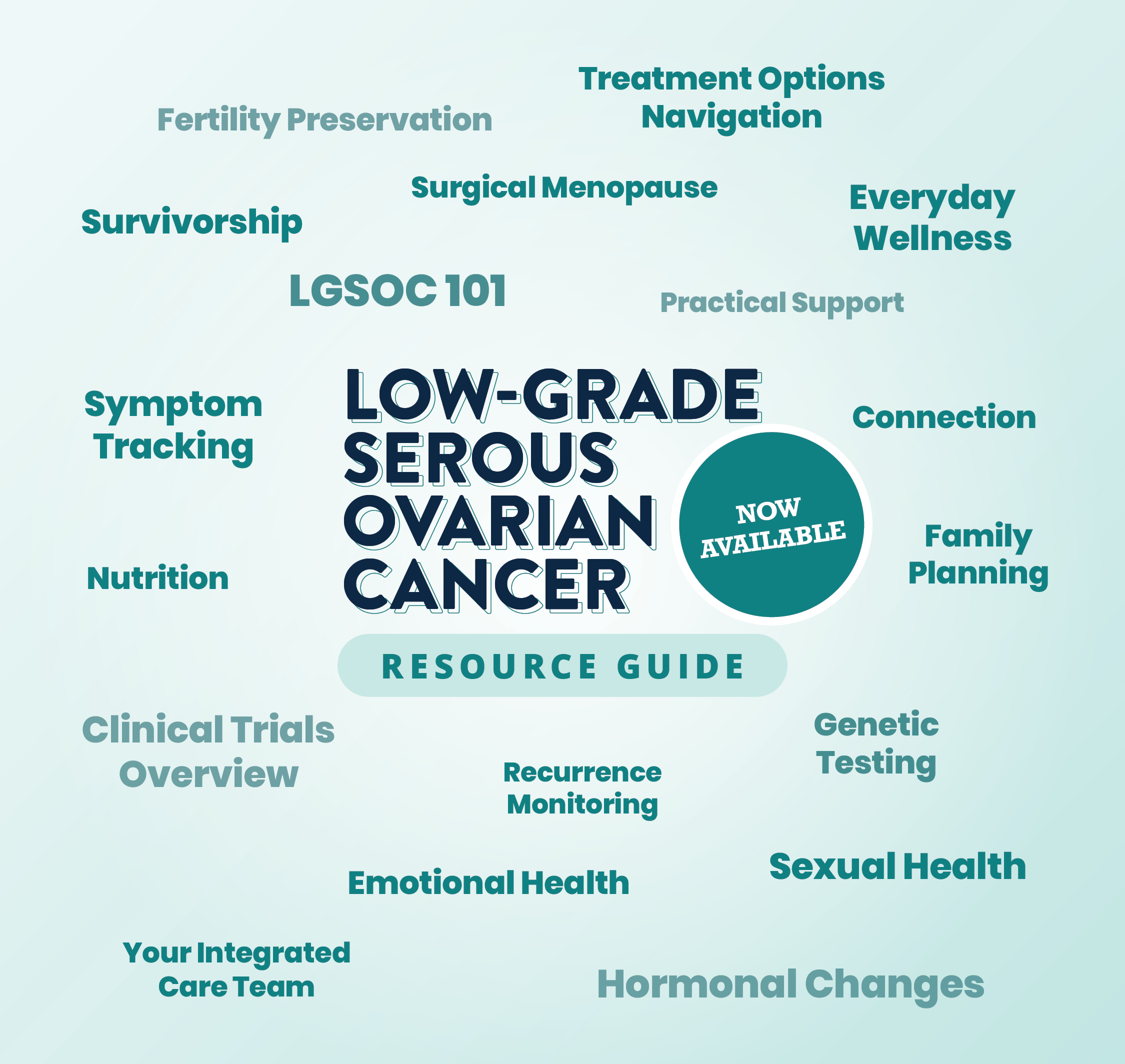
New to LGSOC ?
A comprehensive guide created by leading patient advocacy organizations to help patients, caregivers, and families navigate life with low-grade serous ovarian cancer.
Why LGSOC Needs its Own Awareness Day
-
LGSOC represents a small percentage of all ovarian cancers.
-
LGSOC behaves differently than high-grade ovarian cancer, the more common ovarian cancer.
-
Additional research is critical to improve treatement options.
-
Awareness connects patients, caregivers, researchers, and advocates.
Be Part of the Change
*
Be Part of the Change *
Take Action
Join us this LGSOC Awareness Day to raise awareness and support patients. Share your story, get involved, and help promote research for better treatments. Together, we make a difference!

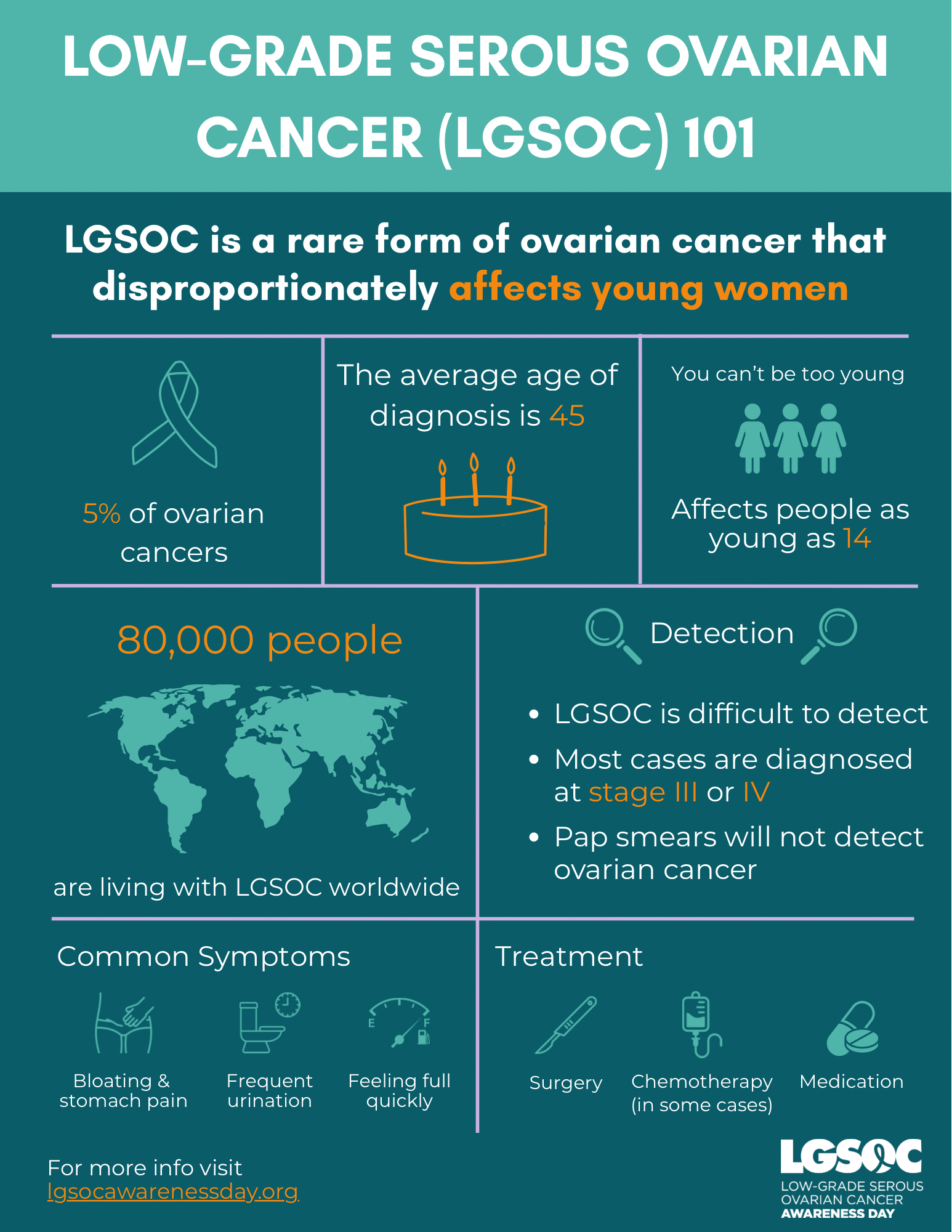
Share the Signs
The symptoms of ovarian cancer are often subtle and easily mistaken for common, non-serious issues, and early detection could save a life. Share the signs and help others catch this disease early.
Support Research
Every gift makes a real impact. Your support funds research for better treatments for low-grade serous ovarian cancer. Learn how your donation—time or money—can help the cause!


Bloating/Weight gain
Pelvic/back/abdominal pain
Feeling full quickly
Bowel/bladder changes
Other symptoms may include: indigestion, fatigue, painful intercourse, menstrual irregularities
Know the Signs and Symptoms
New symptoms and persistent — on and off for a month or constant for more than 2 weeks — need medical attention
Our LGSOC Day Partners